The Velvet Edit: How to Wear Velvet This Festive Season
Velvet is winter wedding season's most forgiving luxury — rich, warm and dramatic with minimal effort. Here is how to choose it, style it for every event, and keep it looking new for years.
There is a reason velvet owns the winter wedding season. It photographs like a dream, keeps you warm without piling on layers, and looks expensive even when the embroidery is minimal. The fabric does the heavy lifting — your job is just to wear it well.
Why Velvet Works So Hard in Winter
Pakistani winters are mild by global standards, but wedding venues at night get genuinely cold, and chiffon leaves you shivering between the car and the hall. Velvet solves the warmth problem elegantly: it is naturally insulating, so a velvet outfit with a shawl is all the layering you need. The pile of the fabric catches light, which gives it that luminous depth no flat fabric can imitate — the reason velvet looks so good in event photography.
Choosing Your Velvet Piece by Event
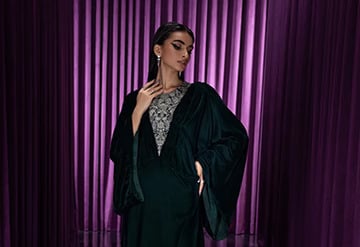
Mehndi and dholki: These are high-energy, dance-heavy events. A velvet kaftan or a shorter velvet kurti with a sharara keeps you comfortable while you move. Rich jewel tones — emerald, deep teal, royal blue — look festive without competing with the bride.
Baraat: Go for the statement. An embroidered velvet shirt with a contrasting dupatta, or a full velvet three-piece in maroon or black, holds its own in a formal hall. This is the event for your heaviest piece.
Walima: Softer territory. Muted velvet in champagne, dusty rose or sage with delicate embroidery suits the walima's slightly more restrained mood. A velvet shawl over a silk outfit is another way in — all the richness, none of the weight.
Formal dinners and office parties: A velvet blazer-style jacket over a plain outfit, or a velvet shalwar with a silk kurta, reads festive without reading bridal.
The Shawl Strategy
If a full velvet suit feels like too much commitment, start with a shawl. An embroidered velvet shawl draped over a plain silk or chiffon outfit instantly upgrades it to wedding-appropriate, keeps you warm, and — practically speaking — is the one velvet piece you will reuse for a decade. Many families pass good velvet shawls down generations, and honestly, the fabric ages gracefully if you store it right.
Styling Rules That Actually Matter
Let the fabric breathe. Velvet is already visually rich, so restraint elsewhere pays off. One statement element per outfit: if the shirt is embroidered, keep the dupatta plain; if the shawl is heavy, keep jewellery simple.
Mind the fit. Velvet has no stretch forgiveness and shows every pull. Get the measurements right, especially across the shoulders and bust. A slightly relaxed fit looks more luxurious than a straining one.
Jewellery pairing: Gold against deep velvet tones is classic for a reason. Polki and kundan sit beautifully on maroon, green and navy velvet. For black velvet, silver or diamonds create striking contrast.
Hair and makeup: Sleek hair — a low bun or straightened lengths — lets velvet's texture stand out. Bold lips and defined eyes suit the fabric's drama; keep the base luminous rather than matte so your face does not look flat next to the sheen.
Caring for Velvet So It Lasts
Velvet's reputation for being delicate is slightly overblown, but it does need basic respect:
- Always dry clean velvet. Water leaves marks on the pile that are difficult to fix.
- Store hanging, never folded for long periods — creases in velvet are stubborn. Use padded hangers for heavy pieces.
- If the pile gets crushed (from sitting, for instance), hold the garment over steam from a kettle — never press an iron directly onto it. The steam lifts the fibres back up.
- Keep velvet away from direct sunlight in storage; deep dyes fade.
Buy one good velvet piece this season instead of three mediocre ones. Worn well and stored properly, it will still look regal five wedding seasons from now — which is more than you can say for most festive fabrics.