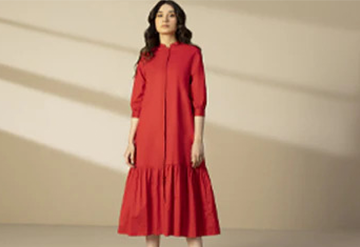
Pishwas vs Anarkali: Your Complete Guide to Flared Festive Dresses
Flared, graceful and endlessly wearable — here is how to tell a pishwas from an anarkali, choose the right fabric and flare, and style both for every occasion on your calendar.
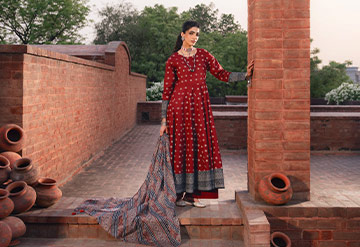
Few silhouettes flatter the way a flared dress does. The skirt catches the breeze, the waist looks defined without trying, and the whole outfit moves like it has somewhere lovely to be. In Pakistan, two cuts own this territory: the pishwas and the anarkali. They get mixed up constantly, even by people who wear them, so let us sort it out once and for all — what each one is, where it came from, and how to wear it well.
Pishwas and Anarkali: What Is the Difference?
The pishwas
A pishwas is cut in two distinct parts: a fitted bodice through the chest and waist, and a very full skirt that flares out from the waist seam. The join at the waist is the whole point — it creates that dramatic bell shape. Historically it was court dress, worn over a churidar or straight trouser, and it still looks most natural with a slim bottom that lets the skirt do the talking.
The anarkali
An anarkali is flared too, but the flare typically starts higher — from just under the bust or from the empire line — so the dress falls in one long, unbroken sweep. There is no hard waist seam. The effect is softer and more column-like from a distance, even though there is plenty of fabric in the skirt. Anarkalis usually pair with a churidar pajama, and the look is a touch more regal and formal.
In short: pishwas means a defined waist with a gathered skirt; anarkali means a high flare with a continuous fall. Both twirl beautifully. Now you know which is which.
A Brief Word on Their Roots
Both cuts grew out of the courts of the Mughal era, when women's dress was as much about artistry as coverage. Noblewomen wore long, flared angarkha-style robes in silk and fine muslin, finished with hand embroidery and metallic thread. Over generations the court robe split into regional variations, and the modern pishwas and anarkali are the descendants — the same love of volume and movement, adapted for contemporary wardrobes and contemporary tailors.
Choosing Your Flare: Fabric Matters Most
The fabric decides whether your flared dress looks dreamy or drowns you. A few rules of thumb:
- Chiffon and georgette give the lightest, floatiest flare. Ideal for evening events and summer weddings.
- Cambric and lawn keep things crisp and structured — better for daytime dawats where you want the skirt to hold its shape.
- Raw silk and karandi add weight and richness, perfect for winter formals.
- Net and organza overlays create volume without heaviness; just make sure the inner lining is comfortable against the skin.
If you are petite, avoid overly stiff fabrics in maximum flare — they can overwhelm a smaller frame. If you are tall, you can carry the grandest ghera of all.
Necklines, Yokes and Details That Change Everything
Two dresses with the same flare can look completely different depending on the detailing. When you are picking one off the rack — or briefing your tailor — pay attention to:
- The yoke: An embroidered or embellished yoke draws the eye upward and adds formality. A plain yoke keeps things minimal and modern.
- The neckline: Round and boat necks feel classic; V-necks and keyholes feel contemporary. For anarkalis, a deeper neckline balanced with a dupatta looks elegant rather than much.
- The hem: Scalloped, lace-edged or gota-finished hems add a festive finish without extra embroidery.
- The back: A simple back with a pretty button or dori closure is often more striking than an overworked front.
Styling Them for Real Life
Daytime dawat: A printed cambric pishwas in a soft color, slim straight trousers, small jhumkas, and flat khussas. Keep the dupatta light — chiffon, not heavily embroidered.
Evening wedding: An anarkali in raw silk or embellished chiffon, churidar pajama, a contrasting dupatta draped over one arm, and heels. One statement piece of jewelry is enough; the dress is already doing a lot.
Eid or festive lunch: A pastel anarkali or white pishwas with silver threadwork. Fresh, photogenic, and comfortable through a long day of hugs and food.
A small tip on dupattas: With a very full skirt, skip the bulky shawl-style drape. A narrow dupatta pinned neatly on one shoulder keeps the silhouette clean.
Tailoring Notes Worth Knowing
If you are getting one stitched, ask your tailor for a cancan or net underlayer only if you want serious volume — otherwise the skirt will stand away from your body in photos. Check the waist seam of a pishwas while sitting down; a too-tight bodice will pull. And always walk, sit and yes, twirl, in the trial fitting. A flared dress should move with you, not fight you.
Pishwas and Anarkali for Different Body Types
Flared silhouettes are generous, but a few guidelines help:
- Petite frames: Choose a moderate flare and a defined waist — a pishwas with a clean waist seam elongates the torso. Avoid overwhelming gheras and heavy fabrics.
- Curvier figures: Anarkalis with the flare starting just under the bust skim beautifully. Structured fabrics hold their shape better than clingy ones.
- Tall frames: You can carry maximum flare and floor-length hems with ease — the grandest designs were made for you.
- Straight figures: Look for designs with waist definition, belt details or a contrasting waistband to create shape.
Beyond Weddings: Where Else to Wear Them
Do not save flared dresses only for grand events. A simple printed pishwas works for daytime dawats and Eid lunches; a minimal anarkali in a solid color is lovely for formal dinners. The key is dialing the embellishment to the occasion — plain fabric, simple jewelry, and the silhouette does the rest. Cost-per-wear drops dramatically when a "festive" dress earns a second and third life.
Flared dresses have survived centuries of changing fashion for a simple reason: they make the wearer feel like the best version of herself. Whether you reach for the structured charm of a pishwas or the sweeping grace of an anarkali, wear it with confidence — that is the detail no tailor can stitch in.