Eid-ul-Adha Collection Guide: Unstitched and Ready-to-Wear Picks
Embroidered organza, festive lawn, raw silk and ready-to-wear — a guided tour of the Eid-ul-Adha collection and how to choose your pieces.
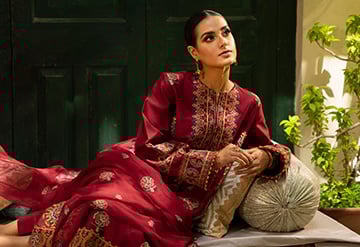
Eid-ul-Adha collections have a particular brief: festive enough for the biggest celebrations of the summer, comfortable enough for the heat, and versatile enough to cover three days of gatherings. The best Eid collections deliver this across both unstitched — for those who like to design their own — and ready-to-wear, for those who want it finished. Here is how to navigate an Eid-ul-Adha collection and pick the pieces that earn their place in your celebrations.
Unstitched: Design Your Own Eid
Unstitched remains the heart of Eid dressing for good reason: you choose the fabric, control the embroidery placement, and get a fit tailored to you. Here is what to look for across the key unstitched categories.
Embroidered Three-Piece Suits
The three-piece embroidered suit is the Eid centrepiece — shirt, trousers, and dupatta, with embroidery doing the festive work. Within this category, fabric sets the tone:
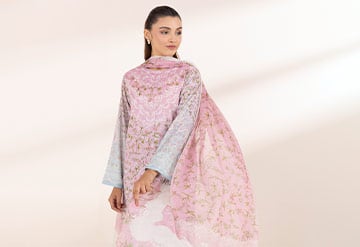
Embroidered lawn three-pieces are the versatile choice — festive threadwork on breathable lawn, wearable from Eid morning through evening. Look for embroidery concentrated at the neckline, sleeves, and hem, with a dupatta that carries a complementary border. These suit the main Eid day beautifully.
Embroidered cambric three-pieces step up the polish — the denser fabric holds embroidery crisply and drapes more formally than lawn. A cambric suit with tilla or thread embroidery is ideal for the main dawat and evening gatherings.
Embroidered chiffon and organza three-pieces are the dressiest tier — sheer, delicate fabrics with embroidery that looks almost jewel-like. These are for Eid evenings and the most formal gatherings. Handle the fabric choice honestly: chiffon and organza demand linings and careful stitching, so factor in tailor time.
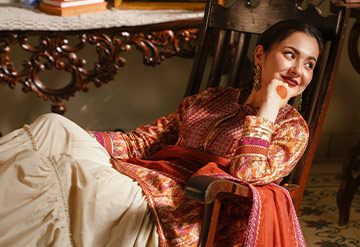
Embroidered raw silk three-pieces bring natural sheen and richness — raw silk's textured lustre makes even simple embroidery look luxurious. Deep colours (teal, maroon, emerald) in raw silk are stunning for evening Eid events.
Embroidered Two-Piece Suits
Two-piece suits — shirt and trousers or shirt and dupatta — are Eid's practical luxury. Without a dupatta to manage (or with the dupatta as the separate statement), they are cooler, easier to wear, and effortlessly modern.
Embroidered lawn two-pieces in fresh colours are perfect for Eid day two and visiting rounds — festive enough for the occasion, comfortable enough for long days of travel between houses. Embroidered cambric two-pieces in bolder colours work for daytime gatherings where you want polish without fuss.
The styling trick with two-pieces: let one element star. An embroidered shirt with plain trousers, or a printed shirt with an embroidered dupatta — restraint in one place makes the embellishment elsewhere look deliberate.
Ready-to-Wear: Eid, Finished
Not everyone has the time or inclination for tailoring before Eid, and ready-to-wear has risen to meet the occasion. The advantages are real: what you see is what you get, the embroidery placement is professionally judged, and the fit is consistent.
What to look for in festive ready-to-wear: Check the finishing as carefully as you would a tailor's work — neat seams, secure embellishment, even hems. Try on your size and one adjacent; festive cuts vary. And consider versatility: a ready-to-wear embroidered kurta that pairs with trousers you own doubles its value beyond Eid.
The smart ready-to-wear strategy is to buy one statement piece — the outfit for Eid day one — ready-made, guaranteeing at least one perfect Eid look regardless of tailor timelines, while your unstitched pieces cover the remaining days.
Choosing Your Eid Colours
Eid-ul-Adha's summer setting invites bold, joyful colour. A few directions that consistently work:
- Festive brights: Fuchsia, marigold yellow, emerald, royal blue — the colours of celebration, made for daylight Eid photography.
- Rich deeps: Maroon, teal, plum, navy — for evening gatherings and raw silk pieces.
- Fresh pastels: Lilac, mint, blush, powder blue — elegant for daytime, especially in embroidered lawn.
- Classic white and ivory: The eternal Eid choice, elevated through embroidery or a colourful dupatta.
Choose colours against your skin in natural light, and consider your existing jewellery — gold-toned embroidery pairs naturally with gold jewellery, and planning them together avoids clashes.
Planning Across the Three Days
An Eid-ul-Adha collection serves a three-day celebration; plan your picks accordingly:
- Day one: Your finest — the embroidered three-piece, the raw silk, the outfit for the family photograph.
- Day two: Beautiful but comfortable — an embroidered two-piece or a lighter three-piece for visiting.
- Day three: Easy elegance — a pastel embroidered suit or a favourite from the collection's simpler pieces.
Buying with this structure in mind prevents the common mistake of three equally-heavy outfits (exhausting) or three equally-casual ones (underdressed for day one).
Timing and Practicalities
Eid collections sell through — the most popular embroideries and sizes go first. Shop early in the collection's launch for the best selection. For unstitched, get fabric to your tailor immediately; pre-Eid tailor queues are the stuff of legend, and the last week before Eid is no time for first fittings. For ready-to-wear, try on in-store where possible — festive fits are less forgiving than casual ones.
Tailoring Details That Make Unstitched Look Designer
The difference between an unstitched Eid suit that looks expensive and one that looks homemade is rarely the fabric — it is the finishing. When briefing your tailor, insist on these details:
- Neckline finishing: A neatly faced or piped neckline with no visible raw edges. Consider a keyhole, a V with tilla edging, or a band collar for a modern feel.
- Embroidery placement: Ask the tailor to centre motifs symmetrically and to position the heaviest embroidery where it shows — neckline, sleeves, hem front. Borders meant for the hem should not end up awkwardly at the side seam.
- Sleeve finishes: Embroidered or lace sleeve borders, finished cuffs, and consistent sleeve length. Sleeves are in every photograph; they deserve attention.
- Hem interest: A wide embroidered border, scalloped edge, or lace finish at the hem gives the kurta a complete, intentional look.
- Trouser cut: Match the bottom to the suit's formality — cigarette pants or straight trousers for modern festive, a traditional shalwar for classic charm. Whichever you choose, the length must be exact; pooling or hovering trousers ruin an otherwise perfect suit.
- Dupatta hemming: A dupatta with finished edges — narrow hem, lace, or embroidered border — looks complete. Raw dupatta edges are the most common giveaway of rushed Eid stitching.
Bring reference pictures to your tailor, but also listen to their advice on what the fabric can actually do — an experienced tailor knows which designs suit which textile.
Styling Your Eid Picks: Accessories and Finish
The collection gives you the outfit; styling makes it Eid:
Jewellery: Let the embroidery guide you. Heavy embroidery needs minimal jewellery — simple studs or small jhumkas. Simpler suits can carry statement pieces. Match metals to thread tones: gold embroidery with gold jewellery, silver tilla with silver.
Shoes: Eid means long days on your feet — prayers, visiting, hosting. Choose festive shoes you have already broken in: embellished khussas, heeled sandals with ankle support, or elegant slides. Never debut new shoes on Eid morning.
Bags: A small festive clutch or potli for day one; a practical but pretty handbag for visiting days when you are carrying eidi envelopes and a phone.
Makeup: Summer Eid makeup needs staying power — primer, long-wear foundation, and the blot-and-layer lipstick technique. Keep a small touch-up kit (lipstick, blotting papers, compact) in your bag; the afternoon will test everything.
The dupatta drape: Practice your drape before Eid, especially for chiffon and organza dupattas that slip. A neatly pinned dupatta photographs infinitely better than one you are adjusting all day.
Budgeting Your Eid Wardrobe
Eid collections tempt overspending, so set your budget before you shop. A practical framework: allocate the most to your day-one outfit (it gets the most wear in photographs and memory), a moderate amount to day two, and the least to the simpler visiting-day pieces. Remember that a well-chosen dupatta or a good shawl can elevate a simpler suit — you do not need three heavily embroidered outfits to look festive across three days. And watch for the collection's versatile pieces: an embroidered kurta that works with trousers you already own is two outfits for the price of one.
Final Word
A good Eid-ul-Adha collection is a toolkit: embroidered three-pieces for the grand moments, two-pieces for the comfortable ones, raw silk and chiffon for the evenings, ready-to-wear for certainty. Choose across the range with your three days in mind, pick colours that make you happy, and give your tailor the time they deserve. Sapphire's Eid collections each year are built around exactly this festive logic — unstitched embroideries across lawn, cambric, silk, and chiffon, alongside ready-to-wear for every Eid personality. Shop early, plan deliberately, and enjoy an Eid where getting dressed is part of the celebration.