How to Stitch and Style Velvet: The Complete Festive Guide
Velvet is winter's most luxurious fabric — but only if it is stitched right. Here is how to cut, stitch, and style velvet for festive season.
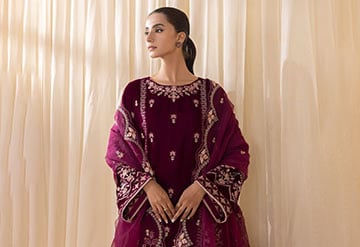
Velvet is unforgiving and magnificent in equal measure. Stitched well, it produces the most luxurious festive outfits of the winter season — rich, light-absorbing, regal. Stitched carelessly, it puckers, stretches, and shows every flaw. Because velvet behaves so differently from cotton or lawn, it deserves its own stitching playbook. Here it is.
Know Your Velvet First
Not all velvet is the same. Cotton velvet is matte, breathable, and relatively easy to handle — the best choice for full suits. Silk-blend velvet has a beautiful sheen and drape but slips under the needle and demands an experienced tailor. Stretch velvet is forgiving to wear but tricky to cut accurately. Before briefing your tailor, know which velvet you have bought, because the stitching approach changes with each.
Also check the pile direction: run your hand along the fabric. Velvet looks darker and richer stroked one way, lighter the other. All pattern pieces must be cut with the pile running the same direction, or your kurta will look two-toned in photographs. This single detail separates professional velvet stitching from amateur work.
Silhouettes That Suit Velvet
Velvet's weight and drape favour certain cuts:
The straight long kurta is velvet's safest and most versatile silhouette. Knee-length or longer, with side slits, it skims rather than clings and lets the fabric's richness speak. Pair with straight trousers or a churidar and a contrasting dupatta.
The flared kurta or pishwas cut uses velvet's beautiful drape to full effect — the flare moves with weight and grace. This is the silhouette for wedding functions and formal winter evenings. It needs a structured bodice to balance the flowing skirt.
The angrakha-style wrap in velvet is strikingly elegant — the diagonal closure and ties add visual interest to a fabric that can look flat in a plain cut. It suits festive dinners and formal gatherings.
Velvet co-ords and jackets — a velvet blazer-style jacket over a plain suit, or a short velvet kurta with trousers — are the modern way to wear velvet without committing to a full traditional suit.
What to avoid: Very tight fits (velvet shows every pull and strain), excessive gathering (the fabric is too thick to gather finely), and complicated patchwork (seams show prominently on pile fabrics).
Necklines and Details
With velvet, restraint in detailing beats excess:
- Necklines: A simple V, a band collar, or a modest round neck with a narrow embroidered or lace trim. Wide, heavy neckline embroidery fights with velvet's texture — a thin line of embellishment is more effective than a broad one.
- Sleeves: Full sleeves with a simple finished cuff, or three-quarter sleeves with a slit. Avoid tight sleeve caps; velvet needs ease at the shoulder.
- Hems: A clean, straight hem with maybe a single row of trim. Let the fabric end simply.
- Buttons and closures: Covered buttons in the same velvet, or small metallic buttons. Plastic buttons cheapen the look instantly.
The guiding principle: velvet is already the decoration. Your stitching details should frame it, not compete with it.
The Dupatta Question
A velvet suit needs a dupatta decision, and there are three good answers:
- Contrasting sheer dupatta — chiffon or organza in a complementary colour. This is the classic choice: the lightness balances velvet's weight, and the colour contrast creates the festive moment.
- Matching velvet dupatta — but only as a stole or shawl-style wrap, never a full traditional dupatta. A full velvet dupatta is heavy, slips constantly, and overwhelms the outfit.
- Embroidered net dupatta — for the most formal occasions, adding delicacy against the velvet's depth.
Never pair a heavy velvet suit with a heavy velvet dupatta in the same colour — the result is a flat, one-note outfit with nowhere for the eye to rest.
Colour and Styling
Velvet's pile absorbs light, which makes colours look deeper and more saturated than on flat fabrics. This is why jewel tones — emerald, maroon, sapphire blue, plum — are velvet's natural palette. Black velvet is timeless evening wear; deep rust and mustard are striking for daytime winter weddings.
Style velvet suits with gold or antique-gold jewellery, heeled sandals or khussas, and a clutch. Hair and makeup can be polished — velvet is a formal fabric and rewards the effort. In daylight, keep accessories slightly lighter so the outfit does not look heavy.
Briefing Your Tailor
Velvet requires specific handling, so brief your tailor explicitly:
- Cut all pieces with the pile in the same direction.
- Use a walking foot or tissue-paper layer to prevent shifting while sewing.
- Avoid backstitching over the same line repeatedly — needle holes show permanently on velvet.
- Press only from the reverse side with steam, never a hot iron directly on the pile.
- Allow extra seam ease; velvet does not ease or stretch into shape like cotton.
If your tailor hesitates on any of these, consider that a warning sign — velvet punishes inexperience.
Caring for Velvet
Wash velvet as rarely as possible; airing after wear is usually enough. When washing is unavoidable, dry cleaning is safest for good pieces. Never wring velvet. Store it hanging on padded hangers or rolled — folding creates creases that are difficult to remove. Keep finished outfits in breathable garment bags away from direct sunlight, which fades the pile unevenly.
Final Word
Velvet rewards those who respect it: choose the right weight, cut with the pile, stitch simply, and pair thoughtfully. Do that, and a velvet outfit becomes the piece you reach for every winter wedding season — the one that looks expensive because it is well-made, not because it is loud. Sapphire's winter festive collections usually include velvet options each year, from shawls to full suits, giving you the fabric to work with; the stitching wisdom above does the rest.